Religious Education Credentialing Breakdown

“Hey Nic, congratulations on your credentialing! Now… what does that mean?”
I’ve received congratulations followed by some variation of that question repeatedly since my receipt of “Advanced Level” credentialing at the end of April. Now that we’re through summer camp season, the launch of the church year, and I’m finished with my portion of the budget process, I have a little bit of time to better answer that question in a way that I’m hopeful will help the whole congregation better understand both the process of credentialing and what it means for UUS.
First off, what is the UUA’s religious education credentialing program?
“The Religious Education Credentialing Program is a three-level program for religious education professionals that nurtures the call to religious education as a profession, provides a comprehensive path for professional development, and articulates and upholds professional standards and guidelines in religious education leadership.” – uua.org
The program is administered by the Religious Education Credentialing Committee (RECC) of the Unitarian Universalist Association in collaboration with the Liberal Religious Educators Association (LREDA). The program encourages in-depth study and requires demonstrated competency in the many facets of lifespan religious education, primarily through the development of a portfolio. Credentialing candidates are also required to meet regularly with a mentor that has been assigned to them by LREDA. I met with my mentor, Nancy Combs-Morgan, virtually for an hour nearly every month for over two years.
When Nancy explained to me that the credentialing program had been written so that the Advanced Level was equivalent to the work required for a Master’s degree, the number of required readings, essays, and classes made more sense to me. On top of eight classes and three reflective essays, I completed reflections on 33 books, movies, articles, and lectures. I also compiled a 50 page portfolio that covered 8 required competencies and 1 elective competency. Each competency required at least two work samples and I had to reflect on the lenses of technology and anti-racism/anti-oppression in at least half of the competencies.
The competencies in which I had to demonstrate knowledge and application were as follows:
- Administration and Volunteer management
- Human and Faith Development
- Safer Congregations, Right Relations, and Professional Ethics
- Sexual Health
- Six Sources of Unitarian Universalist Inspiration
- Systems and Conflict
- Unitarian Universalist Foundations
- Worship
So, why go through this lengthy process?
As a Unitarian Universalist, I believe strongly in the importance of lifelong learning. When I was working part-time for my previous congregation, I knew that I wanted to be in a position to engage with the credentialing process. When I applied for the Director of Lifespan Religious Education position here at UUS, you all were looking for someone who was either already credentialed by the UUA and LREDA or someone who was willing to pursue credentialing. The credentialing process not only allows a credentialing candidate to prove their skills and understanding, but it also ensures that the individual is well-connected with colleagues across the country, strengthening the candidate’s connection to resources and Unitarian Universalism.
My dedication to lifelong learning will always be a piece of who I am. UUS’s understanding of the importance of continuing education and connection to the wider world of Unitarian Universalism, meant that from day one UUS has supported me with time for study leave and professional development funds to take classes, attend trainings and conferences, and invest in myself with retreats for religious educators.
Now that you’ve completed the Advanced Level of credentialing, what’s next?
As I mentioned, I will always pursue more knowledge and understanding. I spent over 80 credit hours in classes over the course of about 2 years. Will I continue taking classes at the same rate? Not likely! There’s too many programs that I want to personally support at UUS to continue taking multiple classes at the same time or even back to back. However, I do plan to continue taking modules and trainings as my time and professional development budget will allow. There are classes in curriculum development, management, and philosophy that I’d like to take – not to mention refresher courses and more levels of Our Whole Lives, comprehensive sexuality education that I would like to take.
I will also continue spending time each month connecting with other religious educators from our area and beyond. I truly believe that my connection to colleagues is one of the key factors in where I am today.
I look forward to continuing to integrate my learning into stronger, more vital religious education programs and multigenerational ministries as UUS, the congregation and its individuals and I continue to learn and grow together.
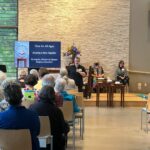
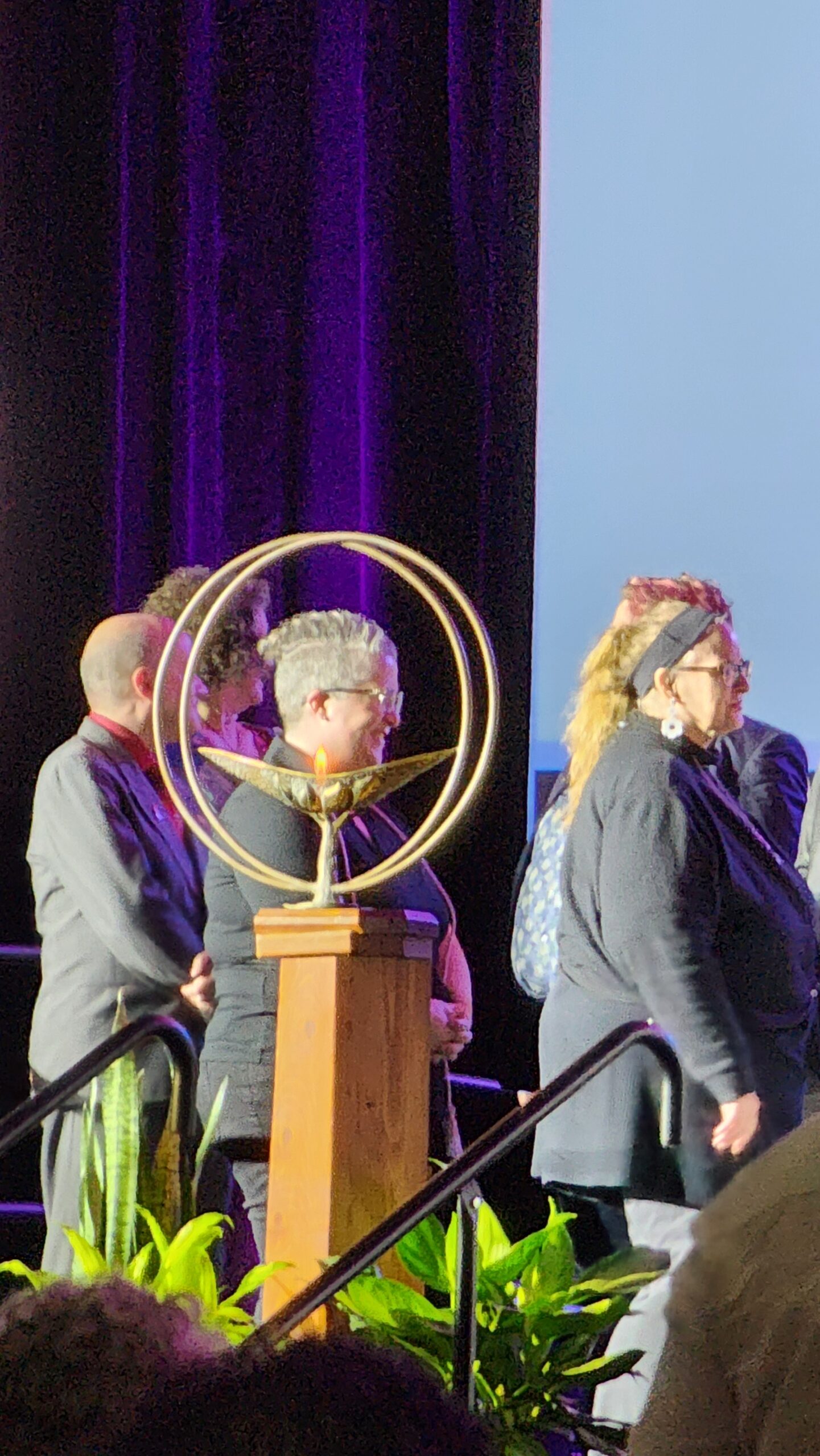
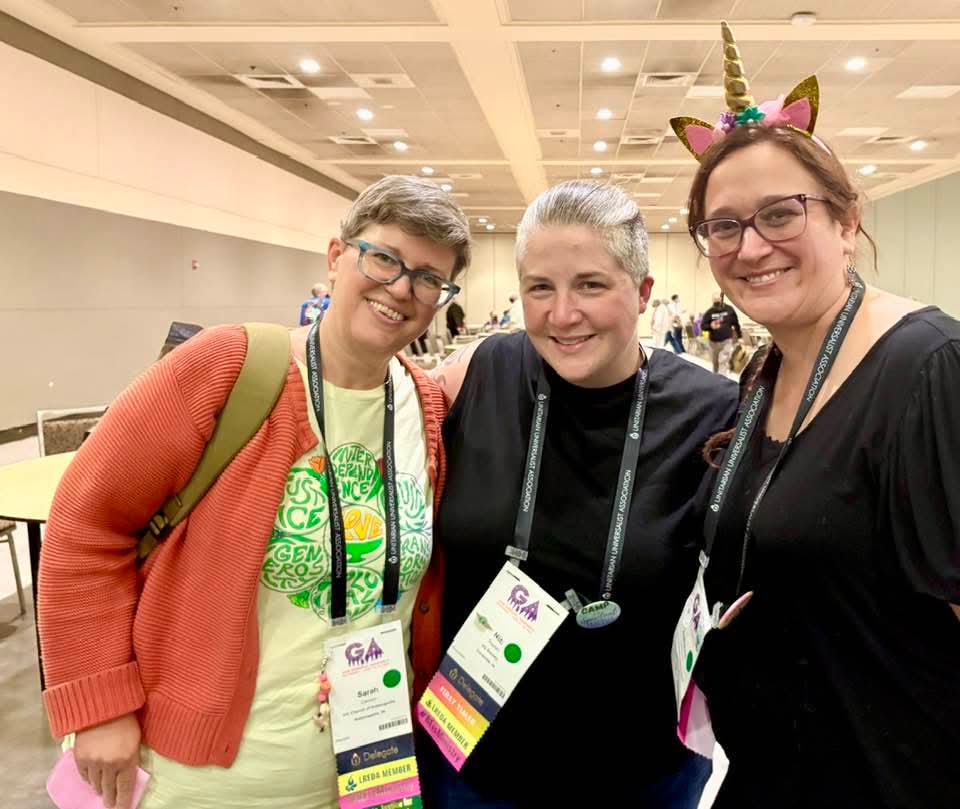
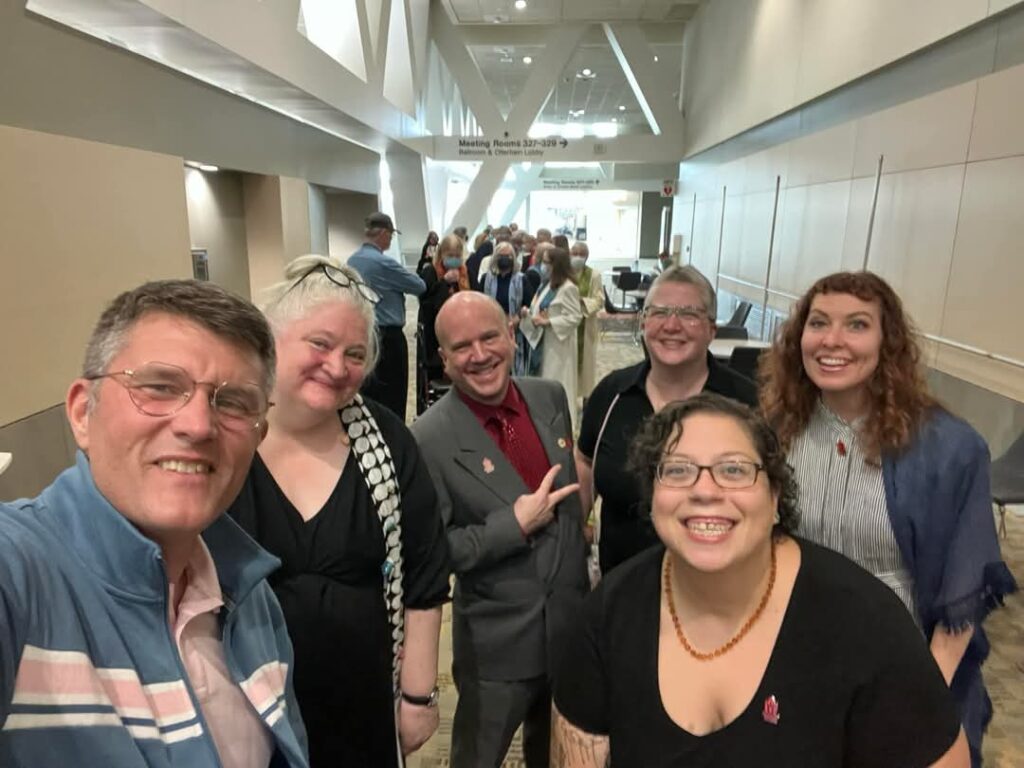
*Photos included of Nic at General Assembly with colleagues and during the Service of the Living Tradition*